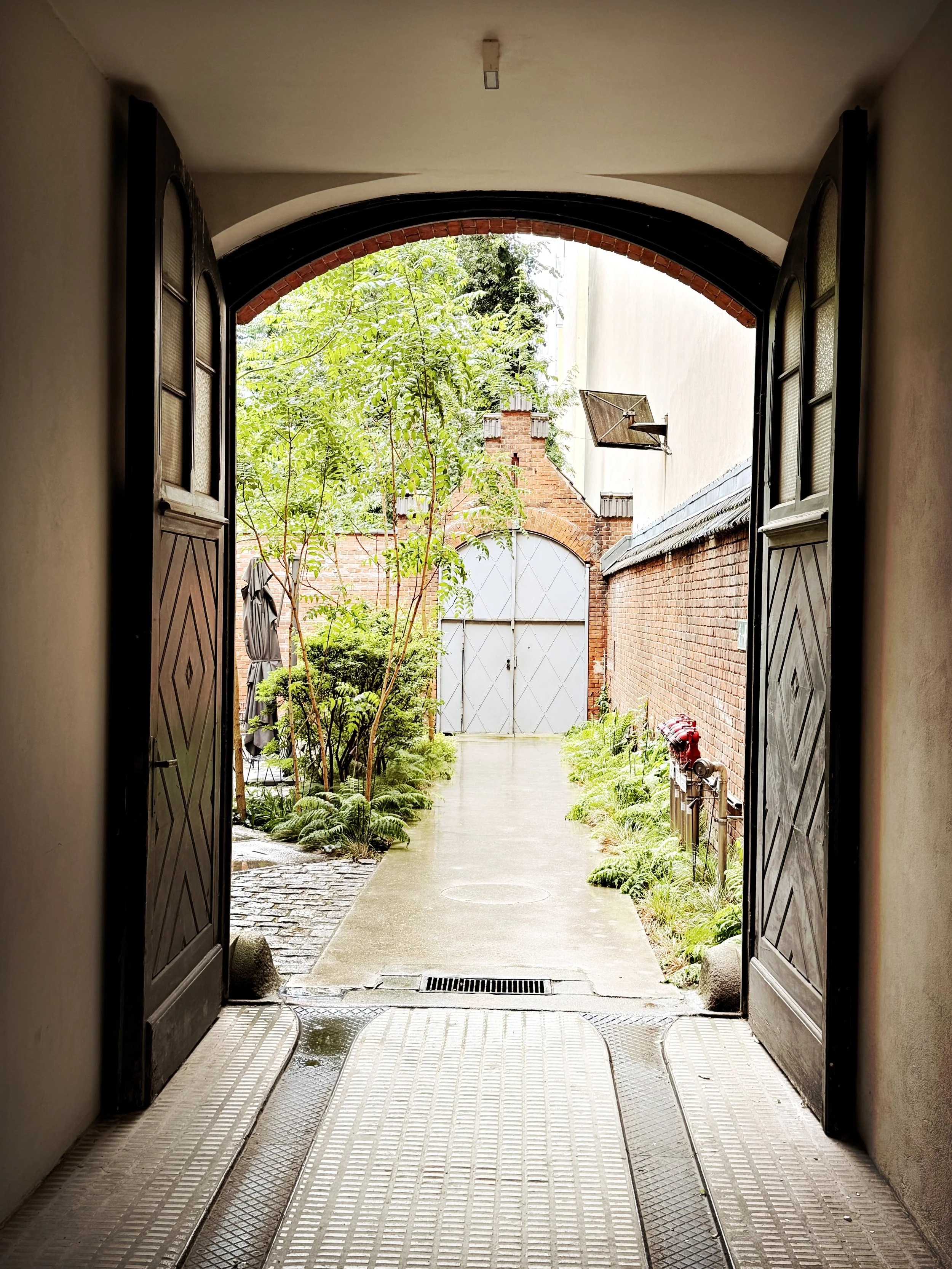

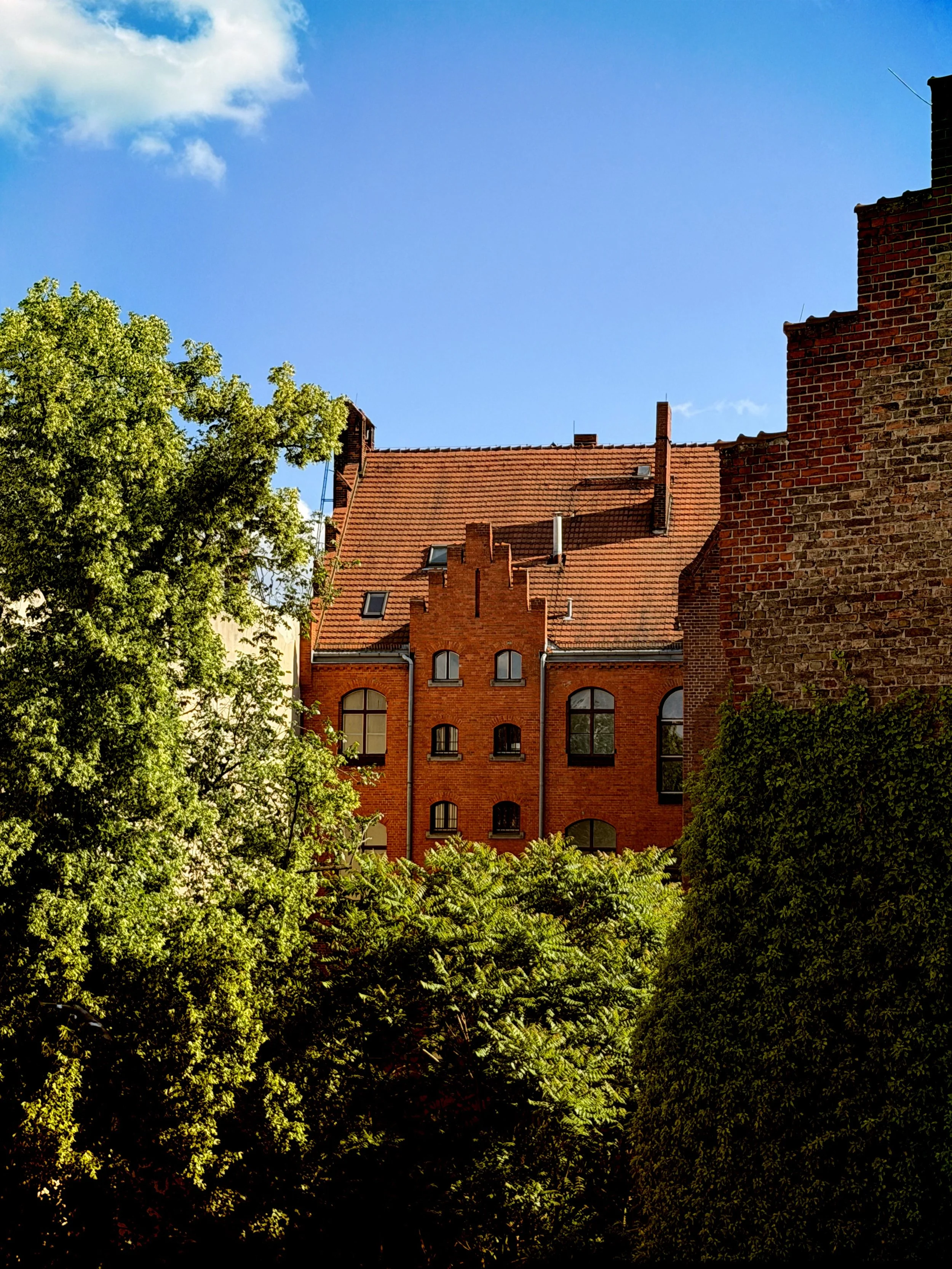
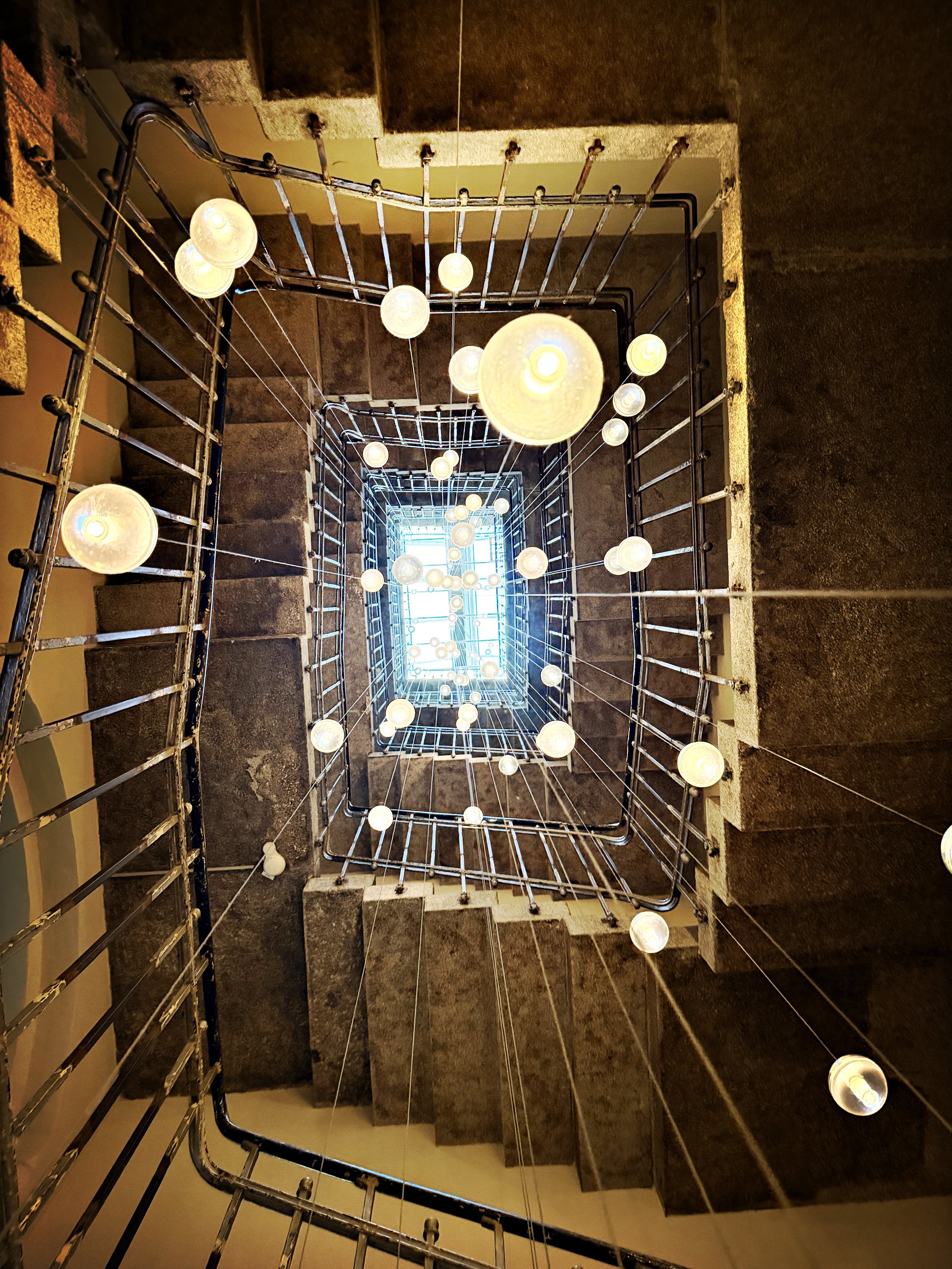

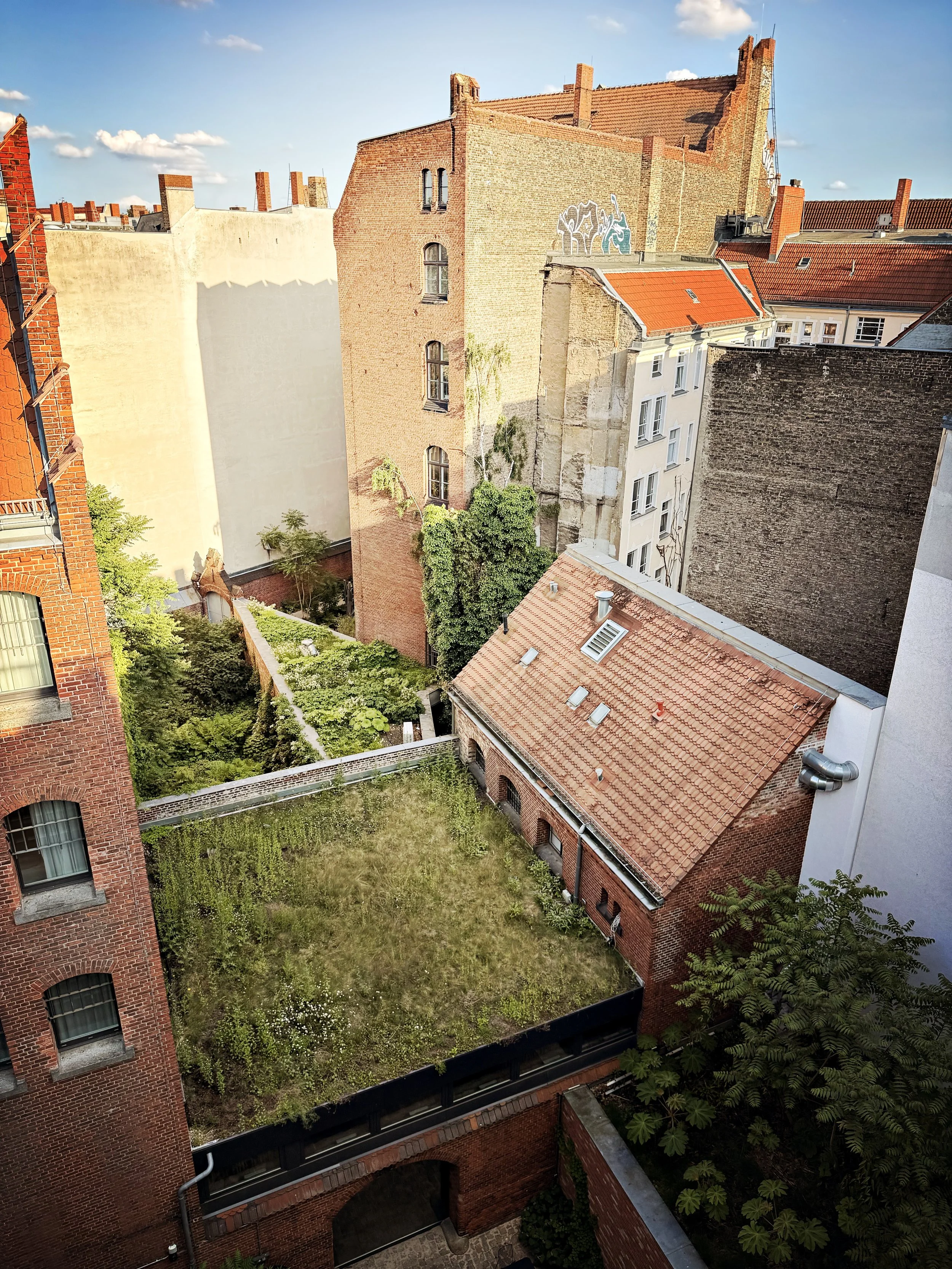
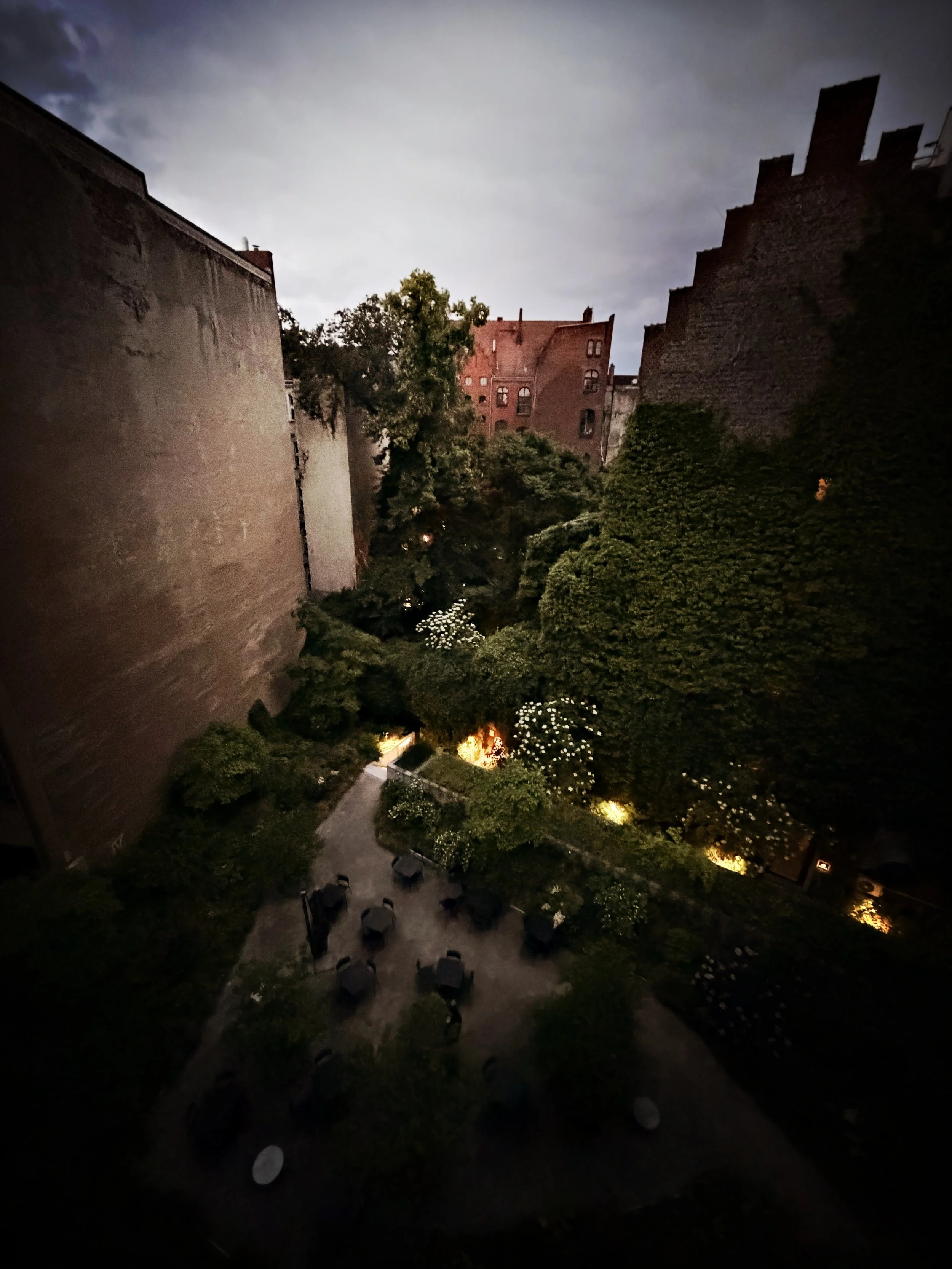
I am writing these reflections from within the remains of an old women’s prison in Berlin. Originally built in 1896 as a Prussian criminal court with an attached prison, it was later turned into a women’s prison, also used for juvenile detention. During the Nazi regime in the 1940s, it held political prisoners, including women involved in resistance networks such as the Rote Kapelle (Red Orchestra). As such, it is a place steeped in the spiritual tension between jury and judged, righteousness and resistance, and between fight and freedom.
I woke up on the second morning of our stay in the magnificent WILMINA hotel, now occupying the former cells, courtyards and court buildings, and this little exploration fell into my lap.
In my recent Spring Newsletter, I had mentioned that “I have a lot to say, but it is not for now.” Some of you contacted me afterward, accusing me of cowardice for not speaking out more plainly. But the time wasn’t right. More importantly, I wasn’t physically yet in the right space, to hear what I had to say - about the state of the world around me, within me, and my own path through it. After all, each of our thoughts is at least a duet of two rhythms: the song of our daimon entwined with the song of the genius loci.
So, this is a small beginning of a response.
For several years now I have been working with a vast atavistic female spirit who I can only call “Mother” or “Great Mother”. Where my book INGENIUM traced a path of preparation — how to shape oneself for such encounters — my forthcoming book The Rooted Flame speaks more openly about the practice itself: goêtic operations with presences as immense and ancient as she is. In it, I share my imperfect passages through this terrain — moments of clarity, confusion, arrival, and departure — and I try to offer some orientation for those who feel called toward their own beginning: to enter her labyrinth, and, to step out into her desert.
Where INGENIUM asks us to become a ford in the river of life, The Rooted Flame is, in a sense, about learning how not to drown when those waters begin to rise.
The latter book is finished and soon at the printer. However, my journey with its spirits continues. They guide me to places like this one — an old prison, to think more clearly about the nature of judgement and forgiveness.
So, I am sharing these “prison thoughts” with you; reflections on how to navigate our loss of freedom and the burning urge to fight back.
I.
These days, it seems increasingly opportune to call for instant karma for the other and shelter for ourselves. We invoke the sword for the trespasser, yet ask that the gate be left open for ourselves. We demand consequence from afar and understanding up close.
It is a curious thing to consider that reversing this impulse would place us at the heart of the Rosicrucian ideal: to ask forgiveness for those who have wronged us, to help them rise even after they have wounded us, and to invite unwavering consequence upon ourselves.
Some of us strive for this attitude, not because we imagine ourselves under the gaze of some celestial accountant, nor because we have joined the circus of pretending sainthood. Rather, it is because we have chosen — however imperfectly — to become medics to a world that has forgotten how to heal itself.
Clearly, the job of the healer is not to decide who deserves to suffer. It is not to stand over the wounded and pronounce judgement, irrespective of how much stupidity caused their suffering. The task of the healer is to preserve what can still be preserved, to rejuvenate what still holds a spark, even when it is buried beneath folly, addiction, self-destruction, or malice.
Anger is a sweet but cheap response. We all can call for the gallows. The harder road rarely travelled is to remain devoted to life itself, no matter what. Standing with the victims of violence is a good and necessary thing to do. Standing among the inflictors of such violence is a much harder thing to do. We don’t do it in solidarity, but in affirmation that we still hold the gate open for them too, that their assumption, they had walked out too far on the other side, is just not true. And to show them how little it would take, sometimes, to be remembered so much better.
Stepping onto this road requires a strong heart, for it runs contrary to many of our atavistic animal instincts: It asks us to grant comfort to others — even for those who sought to obtain it by deception, force, or entitlement — while accepting full responsibility and the next difficult step for ourselves.
Such difference does not spring from a posture of superiority, nor a claim to clearer sight. It’s born from something much more humble: the simple fact that we do not know why each of us is here. It might be our journey to make our heart weigh less than a feather – but do we know if it is theirs?
We may feel called to straighten ourselves from seed into tree, yet another may be meant to wander, to meander, or simply to remain undisturbed in their sleep for a while longer. After all, some have burned their candle so low that they can no longer transform adversity into adventure. What they may need instead — perhaps for years, perhaps for a lifetime — is rest and obscurity, refuge and protection; before anything else, protection from themselves.
We see only fragments of another’s journey, and mostly have no clue about our own. And yet, we each hold the rare capacity to heal, once we begin to see that we make far better medics than moralists.
And I get it too: To hold the truth — especially about ourselves — quietly in an open hand, to examine it without flinching, and then to return once more to the slow work of lightening the clay of our heart. It is a daily trial for which no one is prepared, and in which each of us stands alone. Yet, we don’t need to be ready to accept it. We can even fail, and accept it again… For truthfulness refines what comfort leaves untouched.
II.
If we turn the table and look at this dilemma from the spirits’ point of view, we find all of this tension embodied within the Great Mother. As mankind’s oldest atavism, she remains a magnificent mystery until today. United in her telluric body, she is both healer and sovereign, warrior and oracle, raging storm and sheltering hand.
The ancient being who hears our prayers in times of distress and draws us to her calm breast is also the one who, on another day, casts us into the very trial from which she offered us relief. She is merciful and merciless alike; she gives as readily as she takes. She is a wellspring whose depths promise healing without end, and yet also a grave beneath black waters.
It is an important realization for magicians of the twenty-first century that the very being to whom we turn for refuge and protection may also be the one who first sent the storm.
The older, more atavistic, and more powerful the spirit, the less likely it is to conform to our modern desire for coherence. Such beings are rarely confined to a single function or disposition. They heal and wound, conceal and reveal, nourish and devour. Their nature is multi-facetted, oscillating, and often difficult to predict. Or perhaps more precisely: they are responsive. They respond to history, to circumstance, to relationship, and to the manner in which they are approached.
Obviously, our job is not to become alike to the Great Mother. Quite the opposite; the best medic knows how to give forces greater than them ample space, both in the process of healing as well as in their own body. And yet, there is nothing passive in working with spirits as mighty and ancient as the Great Mother. When I use the term of the divine vessel, it might evoke the misleading image of being a glass jar somewhere in Mother’s kitchen, ready for opportunistic use in holding trash, pickles, or poison on various occasions alike. Taking such a passive role in our partnership with the ancients would be equal to giving up the best of us as embodied humans.
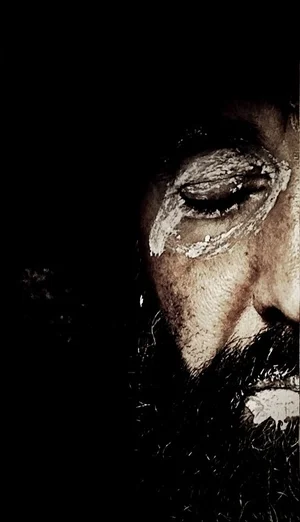
After all, we are meant to be students of the daemonic, lovers of life, and roommates with death, all at the same time. Dancing within these facets of our existence is what the Great Mother teaches us with blue claws and a burning mane. With a calm open hand and wide opened fangs.
Below I am sharing a call to the Great Mother. It’s a short piece, of deliberate imbalance. As you read it, you’ll see, it is equally foolish as it is genuine. It speaks of the naive, human desire to overcome, rather than to pass through. To remain a rock of singular presence, rather than accepting the fact that we exist as shared territory, in every limb of our body. As such, this brief prayer is both juvenile in its intent, as it is deeply human in its hurt. I hope it speaks to you. And if it does, The Rooted Flame might do so too.
LVX,
Frater Acher
III.
Great Mother, Lady of the threshold,
Veiled in hymns and thunder,
Lead me to the place where
I no longer beg for strength.
Where power rises through my own hands,
Where I drink life from my own heart,
Where I no longer dread
The burden of days.
I know the answer you are to give:
That every wound and scar
Is a mark of devotion,
A testament of love
Written into flesh.
Yet I confess:
My river of patience
Lies dry, bitter is my blood
With consolations.
Give me instead strength and fury,
And the rising clarity of rage.
Fill me with hunger that keeps,
The body holy and one.
Great Mother,
Cast off the cloak of surrender!
Show me your sunlit mane, your
Fierce, uncompromising face,
O Mother of the burning horizon,
Lioness of deed and judgement.
Lead me onto the field
Where armors do not rust,
Where days are endless,
Where we stand back to back
In the roaring centre,
And do not turn.
Deliver me, Great Mother,
From the descent of my time.
Be my crescent and flame.
Be the ancient devouring fire,
Leaping from my lips,
As I fade.