The Arbatel’s Seal of Secrets
A central chapter in my book The Olympic Spirits is devoted to the practical working reconstruction of the famous Seal of Secrets of the Arbatel (pp. 205–240). In this undertaking, I draw upon several source texts: alongside the Arbatel itself, above all Cod.Mag.55 from the Leipzig grimoire collection; a brief text that is also titled as Solomo’s Conjuration of the Olympic Spirits. Additionally, I also turn to more obscure materials drawn from German-language folk magic, which since the early eighteenth century had likewise been permeated by the influence of the Olympic Spirits.
The chapter concludes with a complete ritual — presented in two distinct versions — intended to guide the experienced operator. As I make clear throughout the text, the aim of working with the Seal of Secrets is not the direct engagement with the Olympic Spirits themselves, but rather with the operative spirits subordinate to them: the princes and satraps, and all the nameless beings that gather about their courts.
What fascinated me most profoundly about this reconstruction was, first, that it is historically precise and, unlike earlier attempts, reads the original text of the Arbatel down to its finer details in order to arrive at a practical ritual operation. Second, that the operation emerging from this reconstruction reveals a historically attested bridge between early modern grimoire magic and a genuinely animistic worldview — one in which spirits are not approached as mere reflections of human power structures, but rather encountered through the living functions and processes of nature itself.
This brief article is not intended as a condensed restatement of what has already been said in the book. Rather, I want to offer it as a supplement to it.
In designing the book, I deliberately chose — very much in the spirit of the Arbatel itself — to focus upon the textual reconstruction of the ritual proper. That is to say, the two versions of the rite presented there contain everything required for the experienced operator to instruct themself, but nothing beyond this necessity. In particular, I decided to omit several more complex diagrams which, in my judgement, might have distracted from both the written content and the reader’s personal engagement with the text. Among these omissions was the graphical reconstruction of the Seal of Secrets itself.
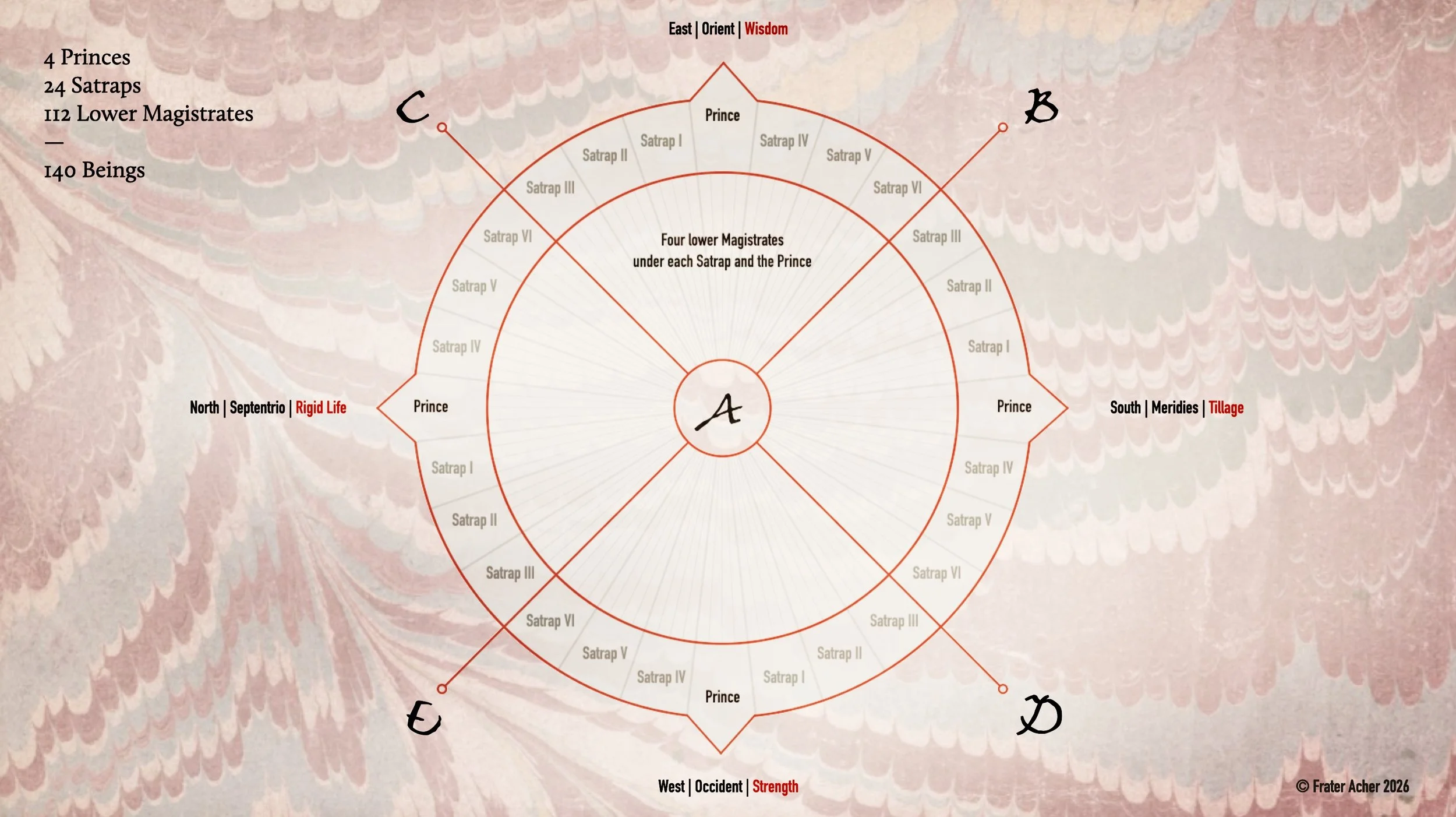
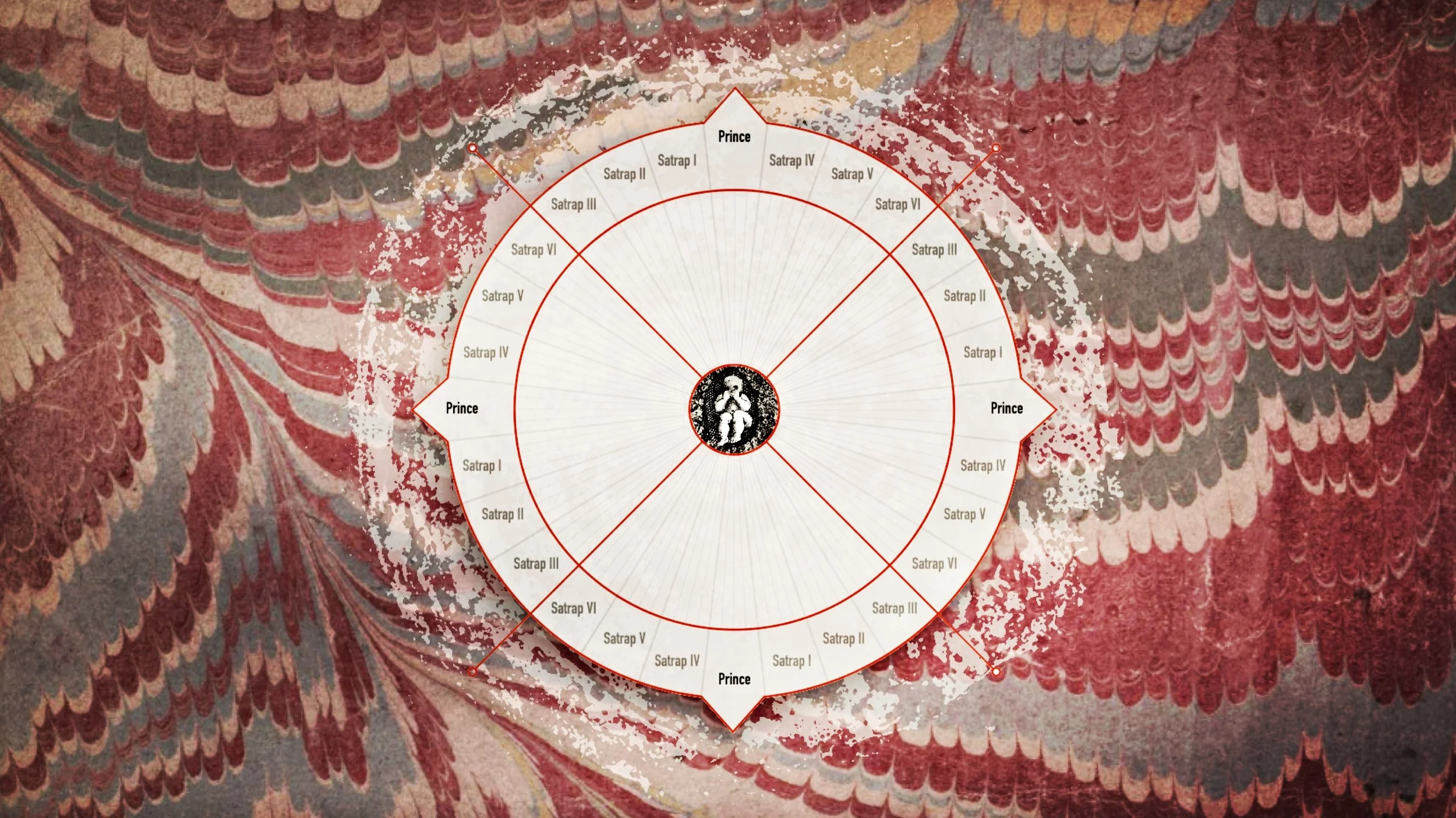
It is this reconstruction which I now gladly offer here, as a kind of graphical appendix. On a practical level, these images possess only limited operative value, which is precisely why they were not included in the book. The work with the Seal of Secretsdoes not consist in manipulating the graphical matrix itself, nor in reproducing it as a magical circle upon the temple floor.
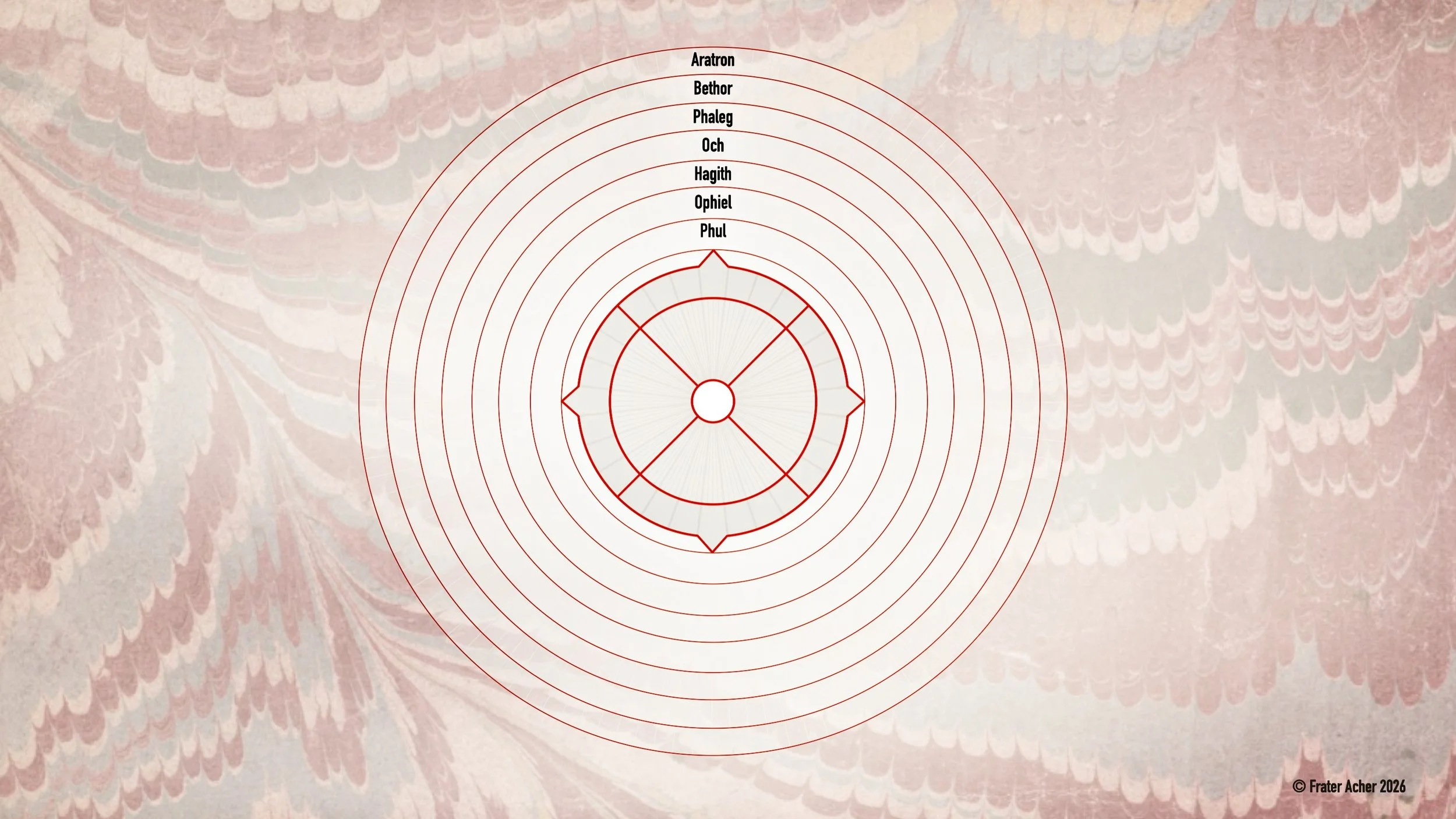
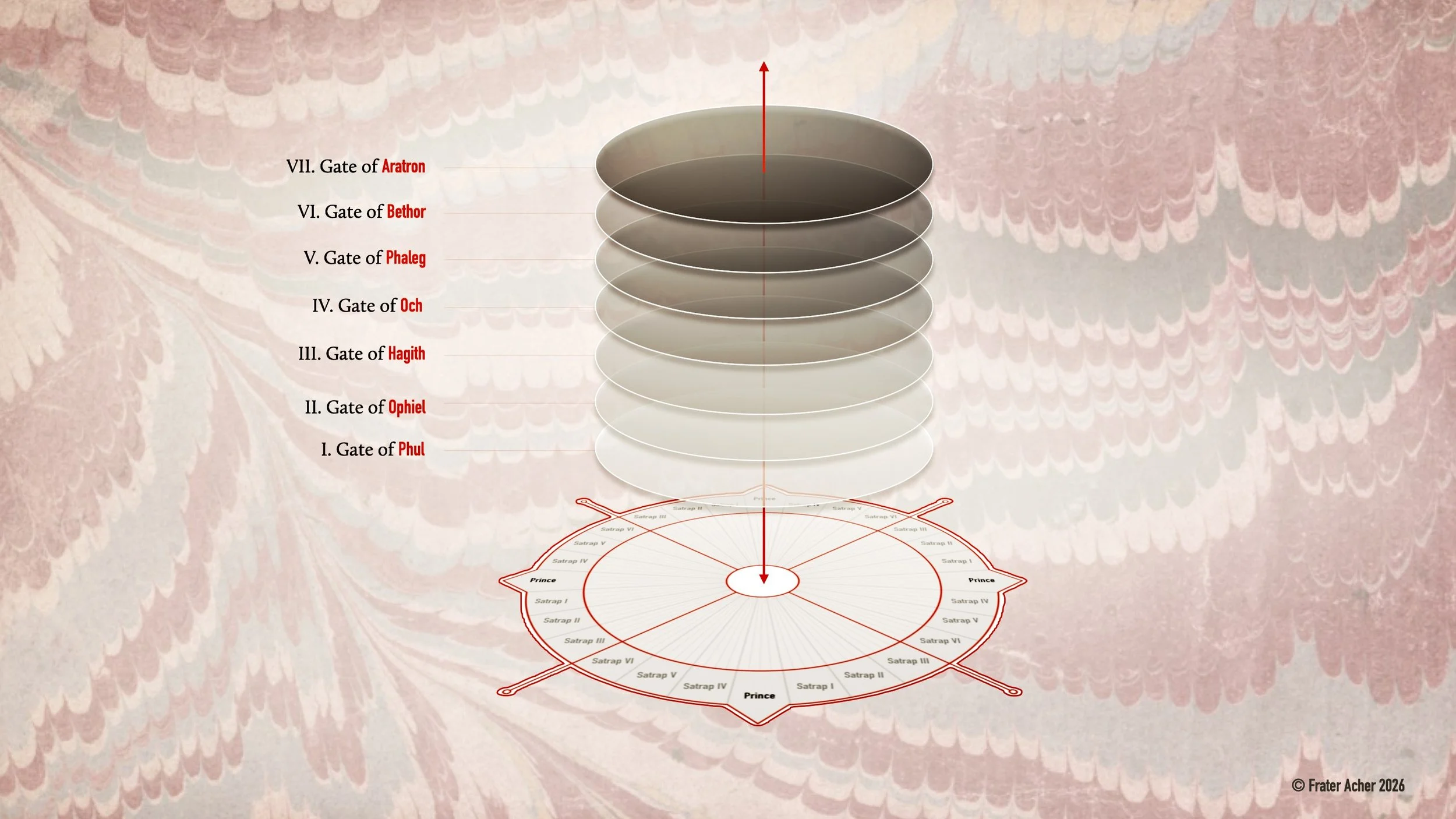
Rather, the practical work rests upon inwardly assimilating the Seal of Secrets as an inner compass: understanding it as the underlying structure of the operation, and through it arriving at a conscious and experiential understanding of how space and spirits are interwoven — in which direction one may turn in expectation of a particular spirit, and how the Olympic Spirits themselves are not merely contained within this compass, but animate it upon several distinct levels.
All of this sounds terribly abstract, which is why I continue to recommend the careful reading of the relevant chapter in the book itself, while offering these images here merely as marginal notes. I should also emphasize that the Arbatel is guided by the same logic in its original form: it describes this seal, yet nowhere provides an accompanying illustration.
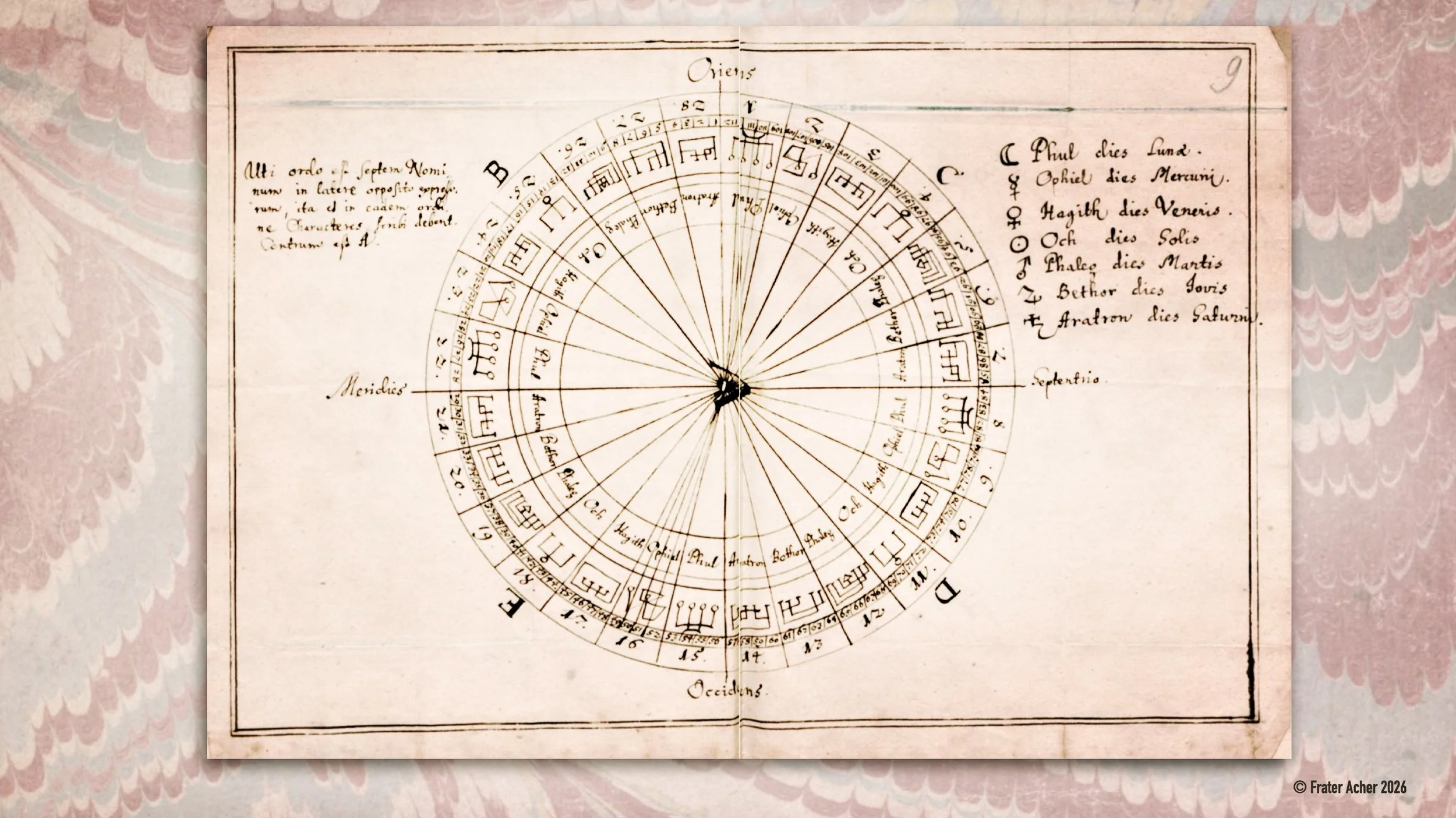
What follows first is the reconstructed Seal of Secrets. The second and third diagrams suggest how this seal must be elevated through different levels in order to navigate the sphere of a given Olympic Spirit. The fourth image shows the incorrect reconstruction of the seal from the source text Cod.Mag.55.
Once again, let me emphasize that these diagrams are intended solely to deepen one’s understanding of the ritual work itself. In practical operation, they require neither incorporation into the rite nor any external pictorial representation. Indeed, to take them too literally or as direct operative instructions is itself one of the many subtle traps and deliberate ambiguities that make the Arbatel such a singular and profoundly guarded work of practical magic.
Note: You can find my transcription of Cod.Mag.55 here. And if you are interested in further Arbatel related material, check out this post as well.