Goêtic Lore
Frater Acher’s Blog on Chthonic Sorcery
A Reader’s Guide to the Collectanea Goêtica
[…] Consider my seriously excited about this upcoming release. It's fair to say there is no Acher without these works. More importantly, these five hundred pages were never meant to end with me — they're meant to be whatever you carry out of them, and whoever that makes you..
Epicurean Eidōla: The Spores of Self
According to Epicurus, every material object continuously sheds extraordinarily thin atomic images of itself into the surrounding space. These are called eidōlon (singular) and eidōla (plural) — literally, “images,” “likenesses,” or “semblances.” We might imagine them, imperfectly but helpfully, as microscopic sheets of smoke carrying the form of the object from which they have emerged.

Becoming Angelic - A Reappraisal
All books are snapshots in time, written from the biographical vantage point at which we happen to stand when the pen touches the page. I often wish, in 2020 I had already gathered the practical goêtic experiences that have since broadened my perspective. Had I done so, I would have woven the following into the book on Trithemius and into my Rosicrucian Reader…
Blue Claws, Burning Mane: Thoughts on Mother
These days, it seems increasingly opportune to call for instant karma for the other and shelter for ourselves. We invoke the sword for the trespasser, yet ask that the gate be left open for ourselves. We demand consequence from afar and understanding up close. It is a curious thing to consider that reversing this impulse would place us at the heart of the Rosicrucian ideal […].
The Arbatel’s Seal of Secrets
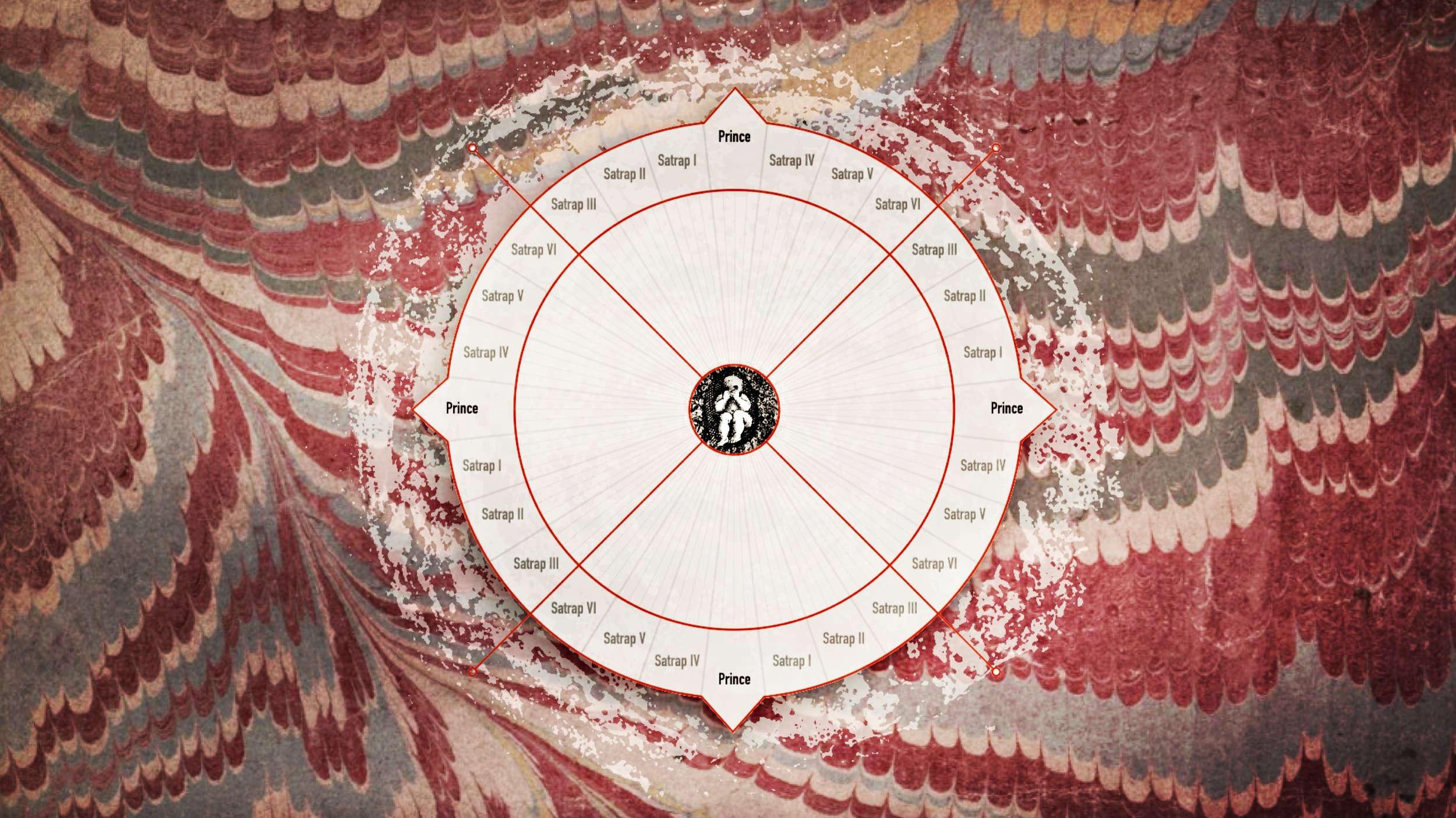
[…] let me emphasize that these diagrams are intended solely to deepen one’s understanding of the ritual work itself. In practical operation, they require neither incorporation into the rite nor any external pictorial representation. Indeed, to take them too literally or as direct operative instructions is itself one of the many subtle traps and deliberate ambiguities that make the Arbatel such a singular and profoundly guarded work of practical magic.
NEW Release
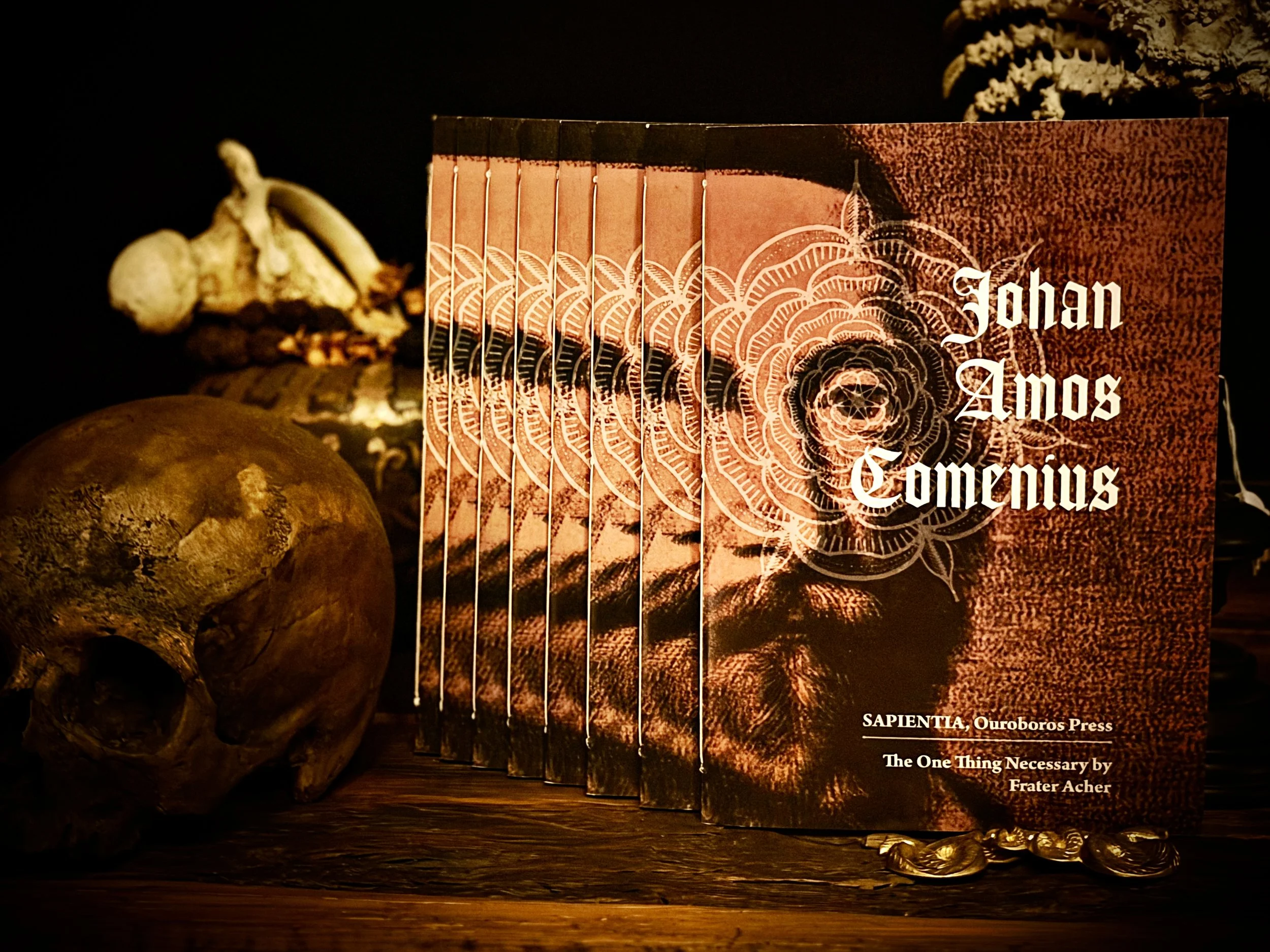
Released for the international market in a limited edition of 100 copies: 24 pages printed on 160 gsm paper, with a full-colour cover on 350 gsm card stock. Each copy is hand-sewn with traditional thread binding. The interior design is by Ouroboros Press; the cover was designed by Frater Acher. Every copy is individually hand-numbered and signed.
Spring 2026 Update
A brief update on the state of affairs in the house of Harper and Acher, including current and upcoming book projects, confirmation of our slot at the OCCULTURE RETREAT in fall, some fun reading recommendations and a first glance at some of the artwork from The Rooted Flame (Paralibrum Press, 2026).

A Conjuration of Sekhmet
[…] From Paracelsus to Johan Amos Comenius to Martin Buber stretches a lineage of seekers who began all their expeditions from the same center: the firm conviction that human beings do not find their footing in the world through interpretation, but through encounter.
The New Notoria: AI and the Angelic Mind
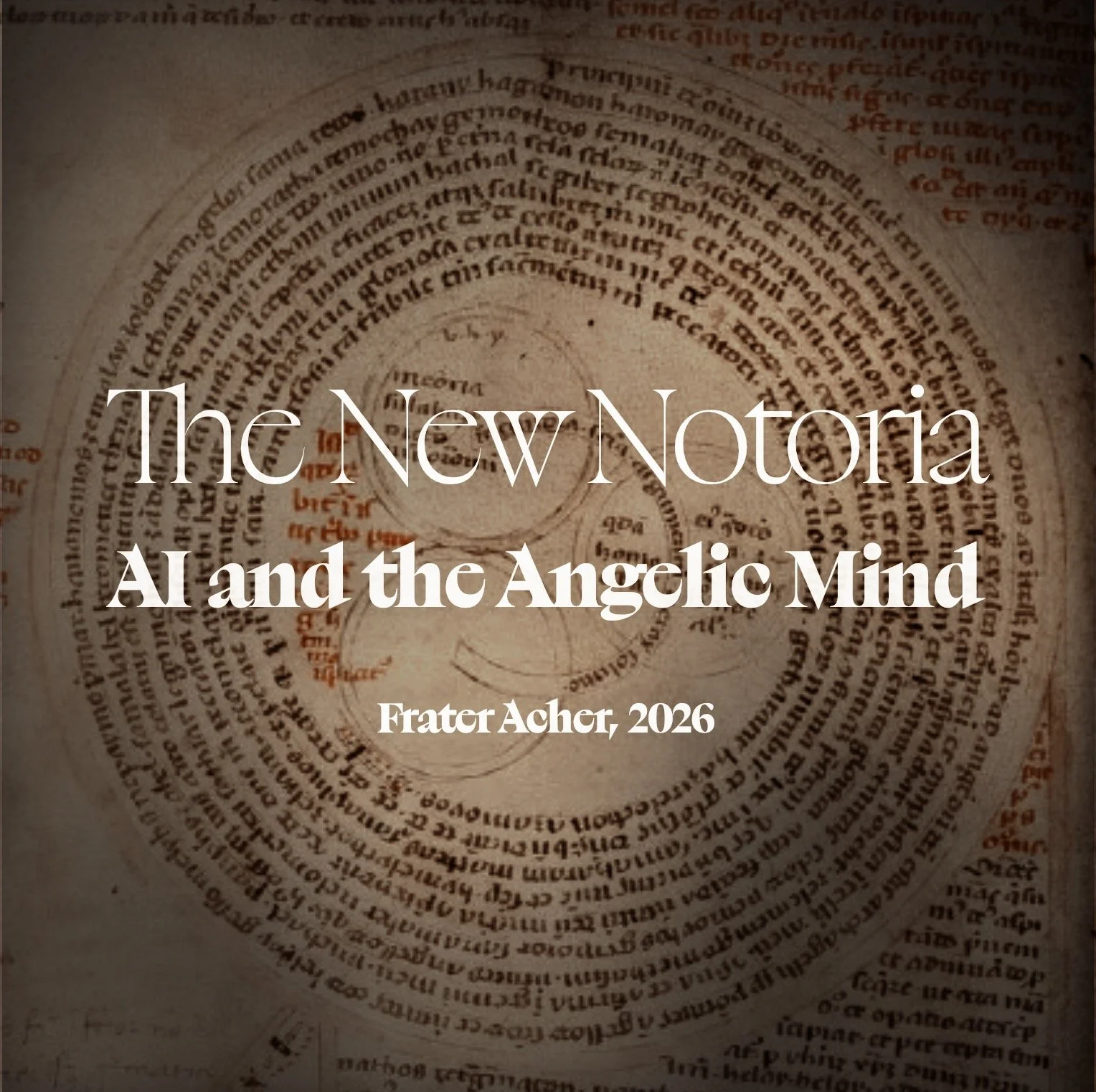
The Ars Notoria was a technology of asymmetric advantage: whoever could access it could leap status barriers. As such, the grimoires focussed not only on learning, but ultimately also on the acquisition of societal agency and secular power. They threatened established institutions by creating seemingly unearned expertise. The modern turn with Artificial Intelligence, however, lies in the aspects of scale and centralization. […]

Goêteia in History - Conclusions
[…] This, then, might be our own task — and perhaps also the moral of this story. The reconstruction of an almost-lost art requires more than a secret library, a sharp pen, and the courage to violate social boundaries. As important, is a pair of well-worn walking boots, a torch, a full moon, and stepping out into the unknown.

Goêteia in History #3
By the end of the third century, the concept of goêteia had become fully established: a term evoking the chthonic and daemonic, yet equally natural and ubiquitous; condemned as heretical and morally deeply suspect, and yet inseparably woven into the periphery of medicine, physics, and all other faculties dealing with the wisdom of Nature.
On the 360 Earthbelt Rulers
From Manilius and Teucer to Rhetorios, astrologers understood the degrees of the Zodiac — activated as they rise at the Ascendant — as a gateway through which cosmic powers shape temperament and destiny. And, true to form, ritual magicians soon inverted this logic: if one degree marks our birth, why not call upon the others to reshape our lives?

Goêteia in History #2
Before the word goêteia was first written down, it was already long in use in the ancient Mediterranean world. It is therefore fitting to first cast a glance at the archaic terrain the term goêteia emerged from — especially its border regions — before turning to its earliest literary sources.

Goêteia in History #1
Goêteia as a literary tradition, if this ever genuinely existed, is thus a domain that has not only been consistently misunderstood, but, as the authors who record it demonstrate, has been deliberately exploited for their own purposes. […]
When Among Daemons
[…] Goêteia describes the art of bridge building into Radical Otherness: the uncommon attempt to establish some sort of faint relationality — without colonizing or even fully comprehending — the vast hive of non-human partners on the other side.

A Manifesto for Man’s Place in Magic
Magic was never meant for men. We made it our own. We tore it out of the earth and pulled it down from the skies. Think of Prometheus as a man who volunteered for a death of fire. Walking up the pyre all by himself, lighting the torch, throwing it down to his feet. Offering himself in the pursuit of what he believed to be withheld unrightfully.

In Exile 2: Goêtic Ethos
In this second part, we look at the small world of everyday work life — and how to inhabit it with genuine magical authenticity. We’ll view this through the lens of the spirits we work with, as goêtic practice is about building interspecies subculture, not human utility. I’ll close with a detailed breakdown of my own Goêtic Ethos — not for copying, but for testing against your own life.

In Exile: Goêtic Meditations on Wage Labor
This two-part essay gathers my reflections, as a practicing goês, on the nature of working life after 25 years spent in both corporate environments and sacred places—temples, caves, mountains, and forests.

A Personal Note
[…] What I have not spoken about, is how my personal approach to this path has changed over recent years. This is, of course, less important as it only affects my own experience and written works. However, as recent feedback showed apparently these shifts can make for rather magnificent misunderstandings. So I’d like to address a few things here.

A Discourse of Two Magi
[…] You are right, no Pope will ever be enough. Just as I shall never say, “This is a fine disease! Come in, bring me affliction, make me frail and beholden. Take my gods for a wooden cross; take the language of the mountains, the rivers, and deserts for the bloodied body of a savior who will not return to us.” I scoff at your vicars. See these shoes, my friend: only I walk in them, and none else. No one leads me by the bridle. My heart was not born to wait for return, when I may wander freely myself.